
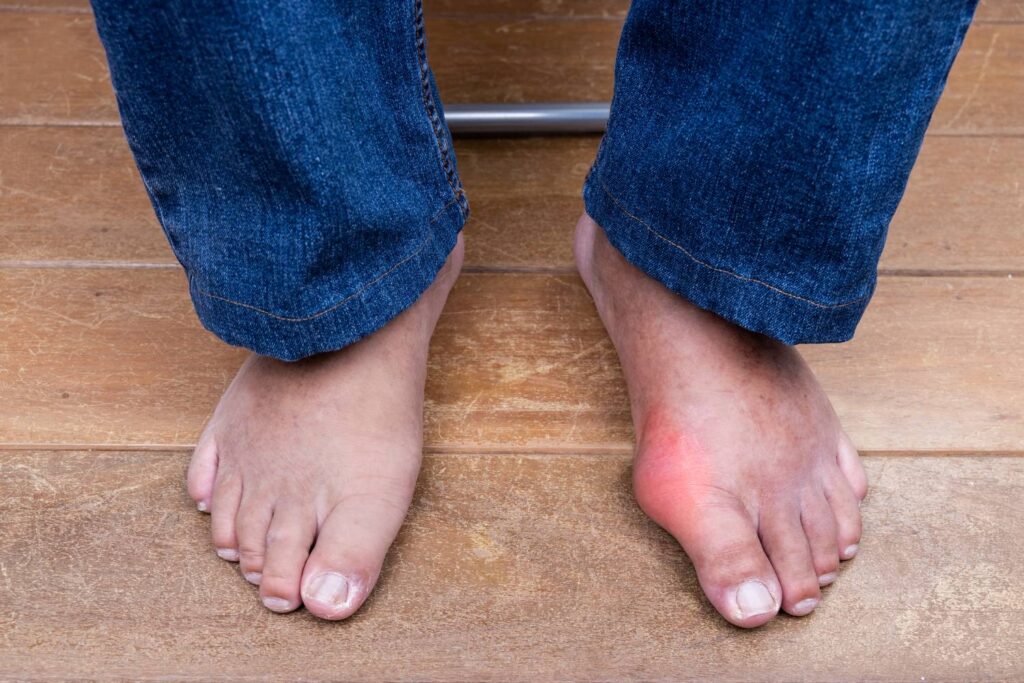

Many people think of gout as a condition triggered by indulgence—too much seafood, alcohol or rich food. It’s often seen as something that comes and goes, with painful attacks that settle on their own.
But for many patients, the reality is very different.
Gout attacks may become more frequent over time, last longer and affect more joints. Some patients begin to notice that even with dietary changes, the attacks still return.
This is because gout is not just about what you eat. It is a chronic metabolic and inflammatory condition that requires a broader approach to management.
If you’ve experienced repeated gout attacks despite trying to “eat carefully,” it may be time to look beyond diet alone.
Key Takeaways
- Gout is caused by elevated uric acid levels, not just diet
- Attacks recur when uric acid remains persistently high
- Diet plays a role, but is not the only factor
- Long-term management can prevent future flare-ups
What Is Gout?
Gout is a form of inflammatory arthritis caused by the accumulation of uric acid crystals in the joints.
Uric acid is a substance produced when the body breaks down purines, which are found naturally in the body and in certain foods.
When uric acid levels become too high, crystals can form and deposit in joints, triggering sudden inflammation.
This leads to:
- Severe joint pain
- Swelling
- Redness
- Warmth
The big toe is commonly affected, but gout can involve other joints such as the ankles, knees, wrists and fingers.
Why Gout Attacks Keep Coming Back
The Core Issue: Persistently High Uric Acid
The key reason gout recurs is that uric acid levels remain elevated over time.
Even when an acute attack settles, the underlying uric acid imbalance often persists.
As a result:
- Crystals remain in the joints
- New crystals continue to form
- Future attacks become more likely
Attacks Are Just the Tip of the Iceberg
A gout attack is the body’s inflammatory response to uric acid crystals.
However, the crystals themselves may already be present in the joints long before symptoms begin.
This is why:
- Attacks may seem unpredictable
- Pain can suddenly occur without obvious triggers
- Symptoms may worsen over time if untreated
Diet Alone Is Often Not Enough
Dietary factors can influence uric acid levels, but they are only part of the picture.
Other important contributors include:
- Genetics
- Kidney function
- Certain medications
- Metabolic conditions (e.g. hypertension, diabetes)
This explains why some patients develop gout despite having relatively balanced diets.
Symptom → Concern → What It May Mean
What Patients Often Notice
- “My gout keeps coming back even though I’ve changed my diet”
- “The attacks are becoming more frequent”
- “More joints are starting to be affected”
What This Pattern May Suggest
These patterns often indicate that uric acid levels remain above the target range, allowing crystals to persist in the body.
When It May Need Further Evaluation
- Recurrent attacks (more than 1–2 per year)
- Increasing severity of attacks
- Involvement of multiple joints
- Development of visible lumps (tophi)
If gout attacks are recurring, it may be helpful to assess long-term uric acid control rather than focusing on individual flare triggers.
Why Long-Term Management Matters
Without appropriate management, gout can become a progressive condition.
Over time, patients may experience:
- More frequent attacks
- Longer-lasting flares
- Joint damage
- Formation of tophi (uric acid deposits under the skin)
The goal of long-term gout care is not just to treat attacks, but to prevent them from happening in the first place.
Treatment Approaches: Beyond Acute Attacks
Managing Acute Attacks
During a flare, treatment focuses on reducing inflammation and relieving pain.
This may involve:
- Anti-inflammatory medications
- Allowing the affected joint to rest
Long-Term Uric Acid Control
To prevent future attacks, the underlying uric acid level needs to be controlled.
This may involve:
- Medications that lower uric acid levels
- Regular monitoring of uric acid levels
- Lifestyle modifications
The aim is to maintain uric acid below a target level where crystals no longer form.
Role of Lifestyle
Lifestyle changes can support overall management, including:
- Maintaining a healthy weight
- Moderating alcohol intake
- Staying well hydrated
However, these measures are supportive, not sufficient on their own for many patients.

How Aaria Rheumatology Helps with Long-Term Gout Management
If gout attacks are becoming more frequent, more severe or increasingly difficult to manage, it is important to seek medical advice early. At Aaria Rheumatology, we work closely with patients to confirm a diagnosis, assess uric acid levels and individual risk factors, determine whether long-term urate-lowering therapy is appropriate and provide practical lifestyle guidance tailored to each patient.
Dr Anindita Santosa, our consultant rheumatologist, carries out a comprehensive approach to help patients reduce the frequency of gout attacks, lower their risk of complications and achieve better long-term disease control.
Contact us today to arrange a consultation and take the next step towards better gout management and long-term joint health.
Frequently Asked Questions (FAQs) About Gout
Can gout be cured?
Is gout only caused by diet?
Do I need medication if I only get occasional attacks?
What foods should I avoid with gout?
Disclaimer
This article is intended for general educational purposes and should not replace personalised medical advice. If you experience recurrent joint pain or suspected gout, consult a qualified healthcare professional.