


Allergic reactions are often associated with symptoms that begin soon after exposure, but not every reaction follows the same timeline. Some can develop hours later because the underlying immune response works differently.
However, symptoms that appear later are not automatically caused by an allergy. Understanding when the reaction began and what happened around the exposure can help determine whether an allergic mechanism is likely.
Timing is a powerful clue, but it is not a diagnosis by stopwatch.
From the Consultation Room
In the allergy clinic, I sometimes begin a consultation with a long restaurant receipt and the understandable question, “Which ingredient did this?”
One patient developed hives several hours after a meal containing many ingredients. Rather than assuming that an unfamiliar food was responsible, we reconstructed what had happened around the reaction and whether similar exposures had caused symptoms before.
The timing mattered, but so did the wider circumstances. Identifying a possible trigger means looking for a pattern rather than simply blaming the last thing someone ate.
Allergy work can involve detective work, but preferably the evidence-based kind, not a culinary guessing game with twelve suspects.
Key Takeaways
- Allergic reactions do not all begin immediately after exposure.
- The timing of a reaction can provide clues about the underlying mechanism, but it cannot identify the cause by itself.
- Testing is most useful when it is selected according to the suspected type of reaction.
- Breathing difficulty or throat swelling after a suspected exposure requires emergency medical care.
Common Assumptions About Psoriatic Arthritis
| Many Assume | What Specialists Know |
| Any symptom that appears hours after an exposure must be an allergy. | Delayed symptoms can have allergic or non-allergic causes. The timing needs to be interpreted alongside the type of reaction and exposure history. |
| A broad allergy blood panel can identify what caused the reaction. | Allergy testing is most useful when it is chosen to investigate a specific suspected trigger or mechanism. Broad testing can produce results that are difficult to interpret. |
| Food IgG testing can diagnose a delayed food allergy. | Food-specific IgG testing is not used to diagnose food allergy. Testing should be selected according to the type of reaction being investigated. |
Why Can Allergic Reactions Happen at Different Times?
The timing of an allergic reaction depends partly on the immune mechanism involved.
Immediate allergic reactions are often driven by IgE antibodies. Symptoms typically begin relatively soon after exposure and may include hives or swelling. More serious reactions can affect breathing or circulation.
Other immune reactions develop more slowly. Some medication-related rashes and allergic contact dermatitis, for example, can appear hours or even days after exposure because they involve different immune pathways.
There are also exceptions to the usual timing patterns. Alpha-gal syndrome, for example, can cause an allergic reaction several hours after eating mammalian meat.
This is why the time between an exposure and the first symptom can narrow down the possibilities, but cannot identify the cause on its own.
What Can the Timing of a Reaction Tell You?
When the trigger is unclear, reconstructing the sequence of events can help an allergist determine which explanations are plausible.
Useful details include:
- What you were exposed to and when;
- How long it took for the first symptom to appear;
- How the reaction developed after it began;
- Whether the same exposure has caused a similar reaction before;
- What treatment was needed and how the symptoms responded.
The surrounding circumstances can matter too. Exercise or certain medicines, for example, can sometimes influence whether a reaction occurs after an exposure that may previously have been tolerated.
The type of symptom also helps put the timing into context. A delayed medication rash is assessed differently from hives that appear soon after eating, even though both may be suspected allergic reactions.
The aim is to establish whether the timing and pattern are consistent with the suspected trigger before deciding whether allergy testing would provide useful information.
Practical Steps You Can Take Now
If you have had a suspected allergic reaction, preserving details from the event can make later assessment more useful.
You can:
- Photograph any visible skin changes;
- Keep ingredient lists or medicine packaging where available;
- Write down when the exposure occurred and when symptoms began;
- Record any treatment you received;
- Avoid deliberately re-exposing yourself to a suspected trigger after a potentially serious reaction.
Try not to remove multiple foods from your diet solely because they were present around the time of one reaction. When the trigger is uncertain, unnecessary avoidance can make the picture more complicated without establishing the cause.
Preparing for a Useful Specialist Review
Bring any photographs or medical records from the reaction, along with the timeline you have recorded. If food or medication was involved, information about the specific product can also be useful.
During the review, it may help to understand:
- What type of reaction the pattern may suggest;
- Whether allergy testing would be useful in your case;
- What a positive or negative result would actually mean;
- Whether you need to avoid the suspected trigger while the cause remains uncertain.
Different allergic reactions require different approaches to testing. Depending on the suspected mechanism, an allergist may recommend a targeted test or decide that testing is unlikely to answer the clinical question.
The aim is to investigate the suspected reaction without creating unnecessary restrictions based on results that may not be relevant.
When Should You Seek Medical Advice?
Seek emergency medical care if a suspected allergic reaction causes difficulty breathing or swelling of the throat or tongue. Rapidly worsening symptoms affecting more than one part of the body also require urgent attention.
Arrange an allergy review if reactions repeatedly occur after a suspected exposure or if you have had a significant reaction but the trigger remains unclear.
Medication-associated reactions should also be discussed with a doctor so that the suspected medicine and the nature of the reaction can be properly documented. Do not deliberately take the medicine again simply to see whether the reaction returns.
How Are Delayed Allergic Reactions Assessed?
Assessment begins with the circumstances surrounding the reaction. An allergist will consider whether the timing and symptoms fit a recognised allergic pattern before deciding whether further testing is appropriate.
Depending on the suspected reaction, assessment may involve:
- Targeted blood tests for specific IgE antibodies;
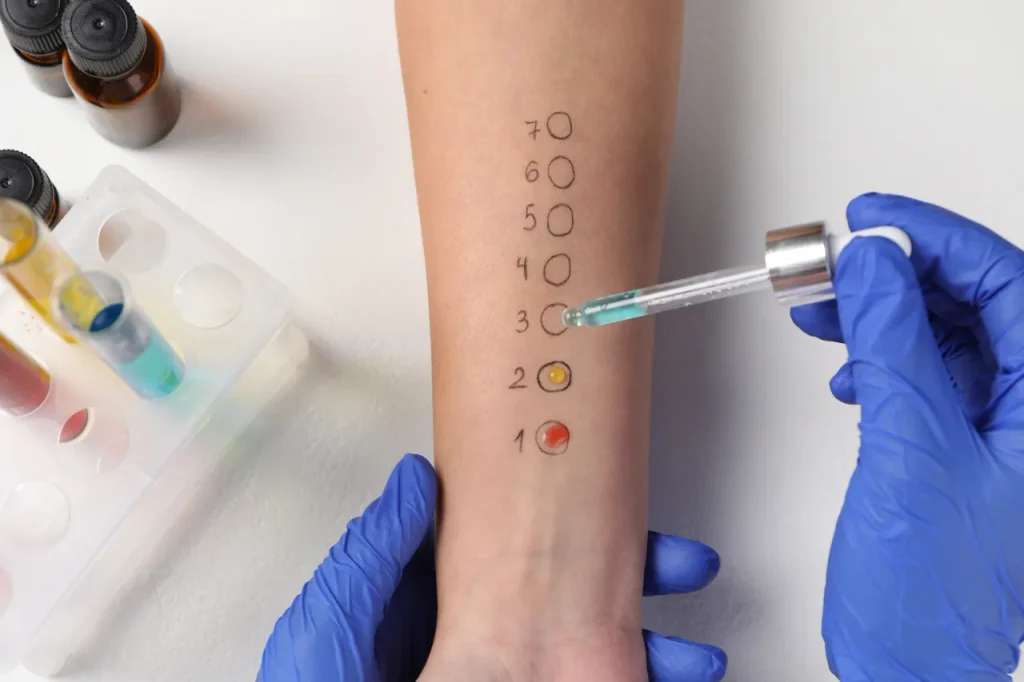
- Skin testing when appropriate for the suspected allergy;
- Patch testing for certain delayed skin reactions;
- A supervised challenge when this is considered necessary and safe.
Not every suspected allergy can be confirmed with a test. A positive result may show sensitisation without proving that the exposure caused your symptoms, while a negative result is only useful if the test is appropriate for the reaction being investigated.
In some cases, history may suggest that an allergic mechanism is unlikely. The next step may then be to consider another explanation rather than continuing to order broader allergy panels.
Looking Ahead: Improving Allergy Assessment
Research is exploring more precise ways to identify the mechanisms behind allergic reactions, including newer molecular diagnostic approaches. Their usefulness still depends on whether they can answer a relevant clinical question.
Aaria Rheumatology provides specialist assessment for suspected allergies and related immune conditions. Dr Anindita Santosa can assess the timing and pattern of a suspected allergic reaction to determine whether targeted testing may be useful. Where a trigger is identified, she can also advise on appropriate avoidance and what to do if another reaction occurs.
If you have experienced a significant or recurring reaction after a suspected exposure, schedule a consultation to investigate the possible cause and understand how to manage your risk going forward.
Frequently Asked Questions About Delayed Allergic Reactions
What is a biphasic allergic reaction?
What is a biphasic allergic reaction?
A biphasic reaction is when symptoms return after the initial reaction has improved, without another exposure to the trigger. This is different from a reaction that first begins several hours after exposure. Recurrent symptoms after a significant allergic reaction require medical attention.
Can antihistamines prevent anaphylaxis?
Can antihistamines prevent anaphylaxis?
No. Antihistamines may help relieve some allergic symptoms, such as itching or hives, but they do not treat the potentially life-threatening features of anaphylaxis. Follow your prescribed emergency plan and seek urgent medical care when anaphylaxis is suspected.
Can a medication cause a rash days after I started taking it?
Can a medication cause a rash days after I started taking it?
Yes. Some medication-related reactions develop after several days rather than immediately after a dose. However, not every rash that occurs while taking a medicine is caused by an allergy, so the timing and appearance of the reaction need to be assessed in context.
Can I develop an allergy to something I have tolerated before?
Can I develop an allergy to something I have tolerated before?
Yes. Previous tolerance does not always mean that an allergic reaction cannot develop later. If a new reaction occurs after something you have previously eaten or used without difficulty, the history still needs to be assessed before deciding whether that exposure was responsible.
Related Articles
- Why Inflammation Affects More Than Just Joints
- Drug Allergies in Chronic Illness: What Patients Should Know
- Drug Allergy or Autoimmune Reaction? Learning the Clues
- Warning Signs Your Allergy Medicine Has Stopped Working
External References
- AAAAI Public Resources on Allergic Reactions and Anaphylaxis
- World Allergy Organization Anaphylaxis Guidance
- EAACI Guidance on Food and Drug Allergy
Disclaimer
This article is for general education and does not replace personalised medical advice, diagnosis or treatment. Seek urgent medical care for severe or rapidly worsening symptoms.
